Seventh-century Pallava masterpieces, carved from living rock beside the Bay of Bengal.
Mahabalipuram — officially Mamallapuram — is a coastal town in Tamil Nadu whose Group of Monuments was inscribed as a UNESCO World Heritage Site in 1984. Created under the Pallava dynasty in the 7th and 8th centuries, the monuments include cave temples, monolithic rathas (chariots), giant open-air reliefs and structural temples.
It is the setting for the Heritage Marathon and the reason the race exists: a place where running and history share the same sea breeze.
Run Here in 2027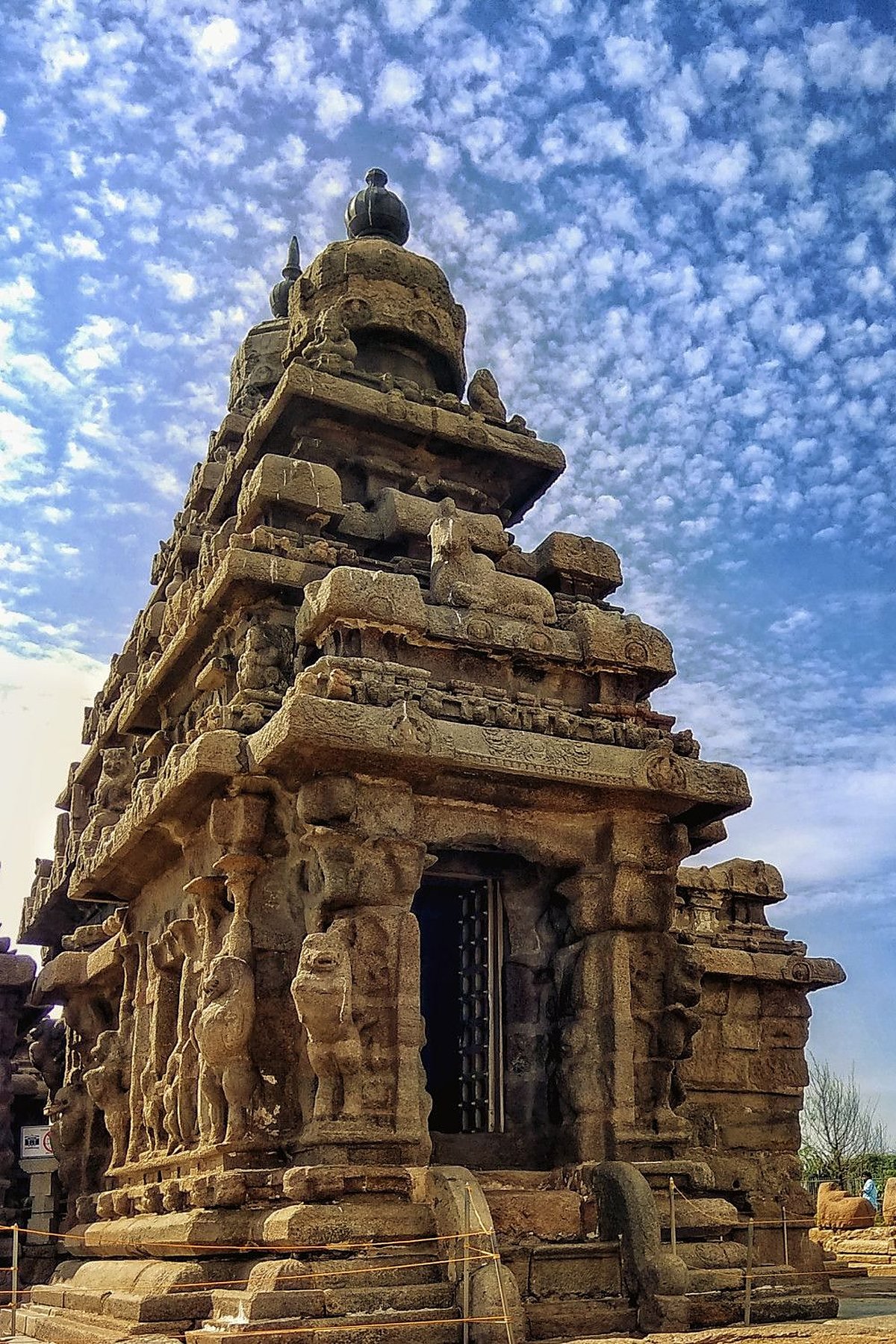
Plan to arrive early or stay on after the race — these sites are close together and best explored on foot.
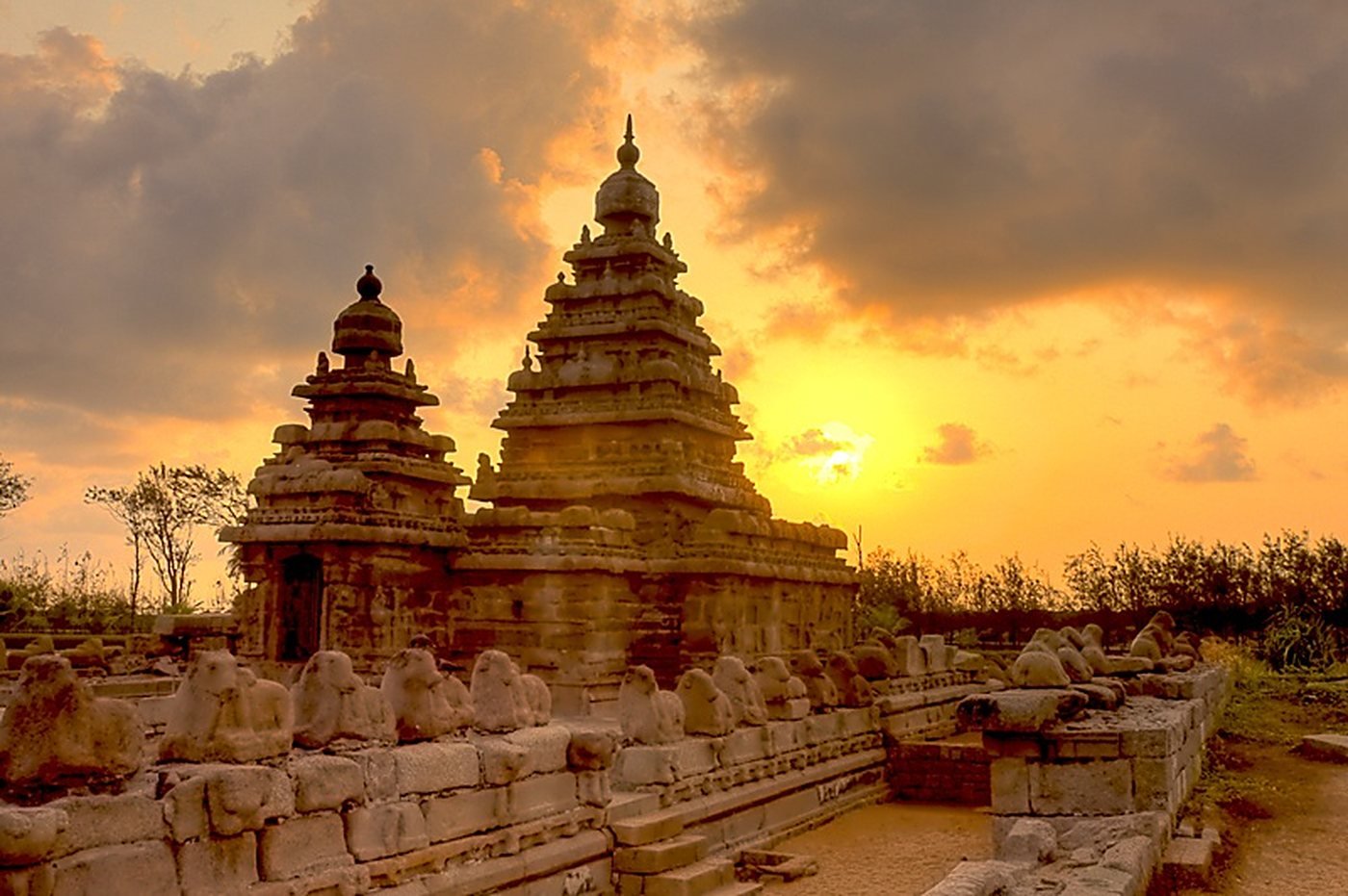
Built from cut granite blocks rather than carved out of rock, the Shore Temple stands right at the water’s edge. Its two pyramidal towers, rows of Nandi bulls and weathered sculpture make it the most photographed monument on the coast — and the visual heart of the Heritage Marathon.
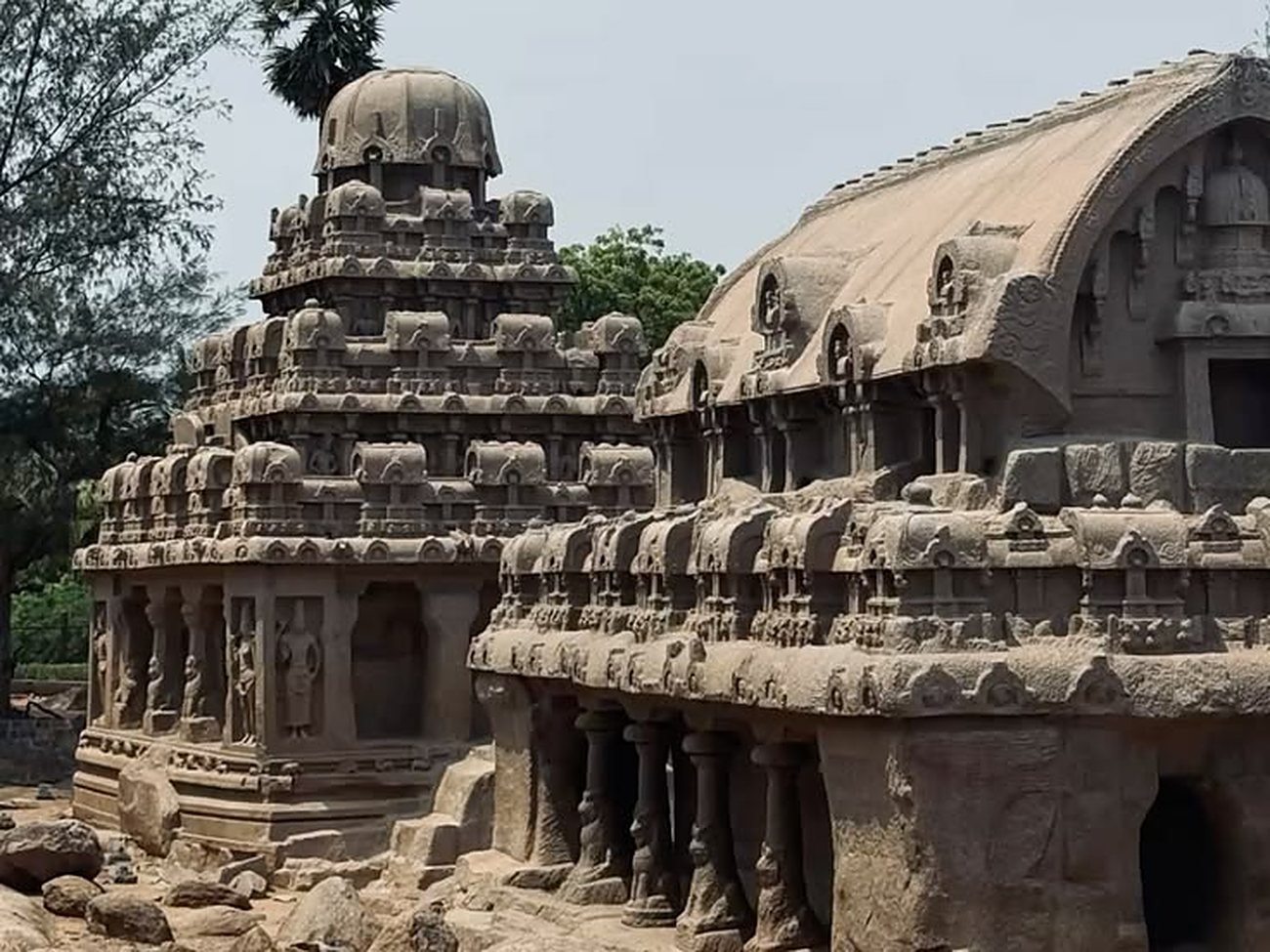
Five temples shaped like chariots, each sculpted from a single block of rock. Popularly linked with the Pandava brothers and Draupadi, they are celebrated as prototypes of the Dravidian temple — with storeyed towers, pillared porches and barrel-vaulted roofs that inspired centuries of South Indian architecture.
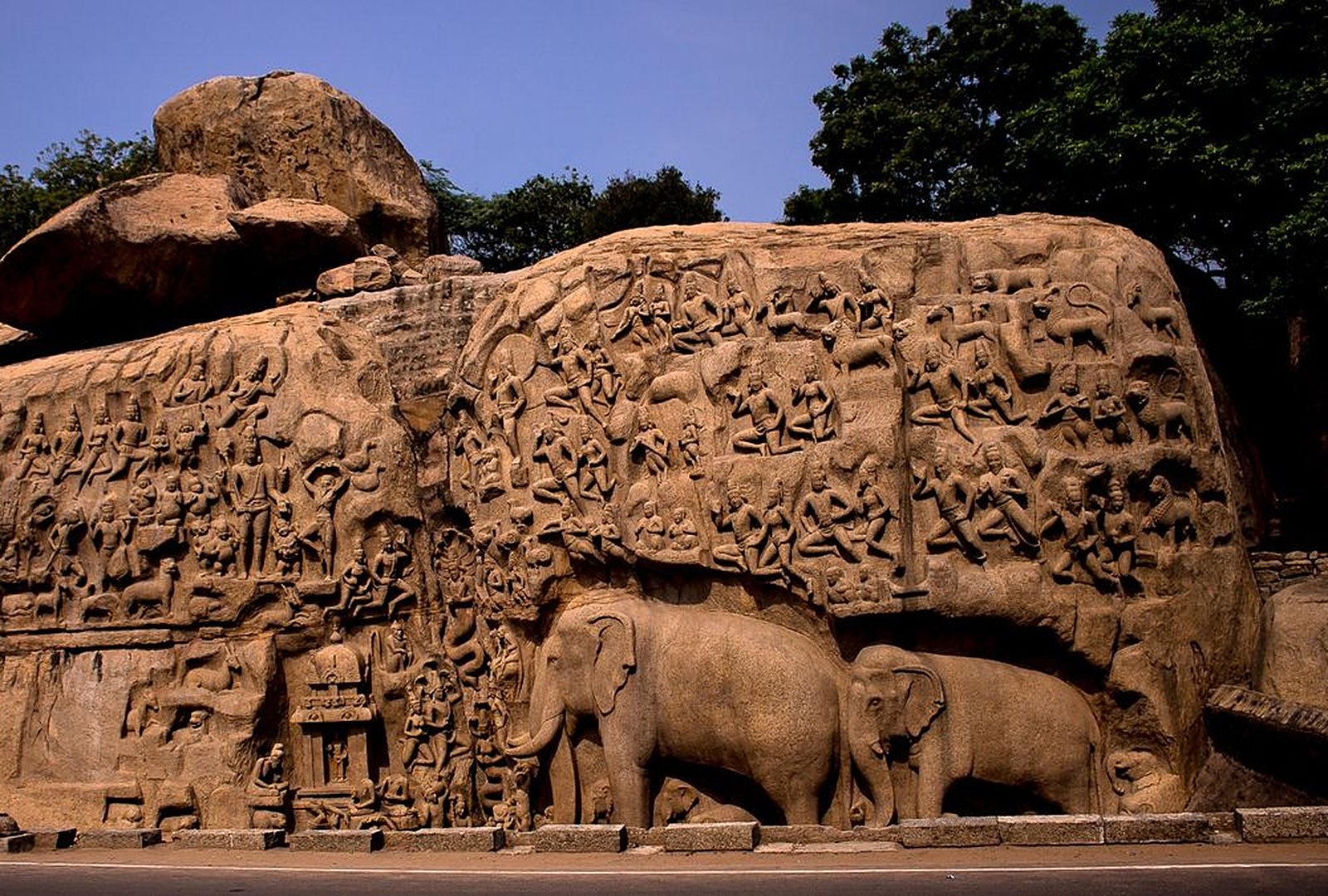
One of the largest open-air rock reliefs in the world, this giant carved boulder is crowded with gods, celestial beings, animals and humans — including a procession of life-size elephants. Scholars read it either as Arjuna’s penance to win Shiva’s blessing or as the descent of the Ganges to earth.
Under the Pallavas, sculptors carve cave temples, giant reliefs and the monolithic Pancha Rathas out of the living rock.
Rajasimha introduces temples built from cut stone, a series that culminates in the Shore Temple.
The Group of Monuments at Mahabalipuram is inscribed on the UNESCO World Heritage List.
Runners take to the coast to celebrate this legacy over 5K, 10K and 21K.
Three distances. One timeless coastline. Choose yours and register in under two minutes.